
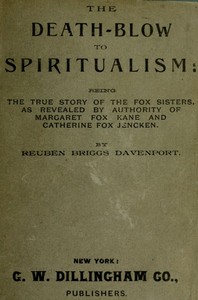
The Death-Blow to Spiritualism: Being the True Story of the Fox Sisters
Reuben Briggs Davenport's book isn't a dry history lesson. It reads like the transcript of a spectacular public unraveling. It centers on one explosive event in 1888: Margaret Fox Kane, one of the famous sisters, standing before a packed New York City audience to demonstrate how she and her sisters had faked the ghostly 'rappings' that launched a global faith.
The Story
In 1848, young Kate and Margaret Fox told their parents they could communicate with a murdered peddler haunting their Hydesville, New York home. Their 'method' was simple: they could make loud knocking sounds by cracking their toe joints. What began as a spooky game to scare their mother captured the imagination of a nation hungry for hope after loss. Their older sister, Leah, saw an opportunity and became their manager. Soon, they were famous mediums, holding séances for the rich and powerful. Spiritualism became a huge religious and social movement. But the pressure of the lie, along with poverty and alcoholism, wore the younger sisters down. This book gives us a front-row seat to Margaret's dramatic public confession, where she showed the world the simple physical trick behind the mystery and begged for forgiveness.
Why You Should Read It
This story hooked me because it's about so much more than a séance scam. It's a painfully human drama about three sisters trapped by their own creation. You see the thrill of fame, the crushing weight of a lifelong secret, and the complex family loyalty (and resentment) that bound them. Davenport, writing soon after the confession, captures the cultural earthquake it caused. The book forces you to ask: Why did so many want to believe? What does it take to finally tell the truth, even if it destroys your legacy? The Fox sisters weren't master villains; they were flawed people who lost control of their own story, and that's what makes it so compelling.
Final Verdict
Perfect for anyone who loves a juicy historical scandal, true crime fans interested in frauds rather than murders, or readers fascinated by the psychology of belief. It's a short, gripping account of how America's first big 'fake news' story played out in the 19th century. If you've ever wondered how massive cultural movements begin, sometimes the answer is: with two bored kids in a creaky farmhouse.
This masterpiece is free from copyright limitations. It is now common property for all to enjoy.
Robert Lewis
10 months agoThe formatting on this digital edition is flawless.



Joseph Martinez
7 months agoWithout a doubt, it provides a comprehensive overview perfect for everyone. I will read more from this author.