
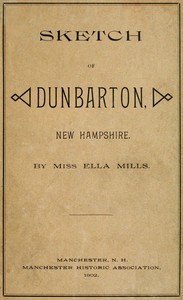
Sketch of Dunbarton, New Hampshire by Ella Mills
Let's be clear from the start: Ella Mills' Sketch of Dunbarton is not a page-turning thriller. It's something quieter, and in its own way, just as compelling. Published in the late 19th century, it's a local history written by someone who clearly loved her hometown.
The Story
The book is exactly what the title promises: a sketch. Ella Mills acts as our guide, starting from the very beginning when the land was first granted and settled in the mid-1700s. She traces the growth of Dunbarton from a handful of isolated homesteads into a proper town. We follow the early families—the Starks, the McCurdys, and others—through their daily battles with the land. She details the building of the first meeting house, the formation of the first militia for the Revolutionary War, and the slow establishment of schools and roads. Using town records, family papers, and likely a good dose of local oral history, she pieces together a narrative of community resilience. It's the story of how a place gets its name, its character, and its memories.
Why You Should Read It
What makes this book special is Ella's voice. You can feel her connection to the soil and the people she's writing about. This isn't a dry academic list of dates; it's a neighbor telling you about the old families down the road. She has a keen eye for the small, human details that bring history to life—the hardship of a particularly long winter, the controversy over where to build a new road, the personality of the town's first minister. She makes you care about these long-gone residents because she clearly did. Reading it, you get a powerful sense of how much work and sheer grit went into building the seemingly peaceful New England towns we see today. It’s a humbling and fascinating perspective.
Final Verdict
This book is a perfect, cozy read for a specific kind of reader. If you love local history, genealogy, or are fascinated by the social fabric of early America, you'll find it utterly absorbing. It's also ideal for anyone from New Hampshire or New England who wants to deepen their sense of place. Think of it as the literary equivalent of spending an afternoon in a small-town historical society, listening to the most knowledgeable volunteer they have. It's not for someone seeking a fast plot, but for a reader who enjoys thoughtful, grounded storytelling that connects us to the past in a very real way. Keep a cup of tea handy and prepare to be transported.
This title is part of the public domain archive. Knowledge should be free and accessible.
Patricia Lopez
8 months agoIf you're tired of surface-level information, the emphasis on ethics and sustainability within the topic is commendable. It’s hard to find this much value in a single source these days.
James Martin
10 months agoAfter spending a few days with this digital edition, the clarity of the writing makes even the most dense sections readable. A mandatory read for anyone in this industry.


Emily Gonzalez
2 months agoI wanted to compare this perspective with traditional views, the case studies and practical examples provided add immense value. This is a solid reference for both beginners and experts.